Gardening Services in Bayswater

Our gardening services in Bayswater cover practical, well-planned work for gardens that need regular attention or a one-off reset. Whether the focus is a tidy lawn, controlled hedges, safer access, or a fuller maintenance plan, we shape the work to the condition of the outdoor space rather than forcing a one-size-fits-all approach. The aim is straightforward: keep the garden manageable, attractive and suited to how you use it.
We support a wide range of domestic garden tasks, from routine upkeep to heavier clearance and light landscaping work. That can include mowing, hedge trimming, garden clearance and related maintenance, along with improvements that help borders, paths and planting areas look more settled. If you want a clear plan and a practical quotation, start by looking through the services that match what your garden needs.
For a better idea of what is available, you can explore our services overview and then decide which jobs should be prioritised first. Some gardens need a single visit to restore order, while others benefit from a seasonal schedule that prevents the same issues returning. If you are comparing options, begin with the areas that affect appearance, access and day-to-day upkeep most directly.
Regular garden maintenance that keeps things under control
Ongoing garden maintenance is often the best way to keep a property looking cared for without allowing small jobs to build up into larger ones. In practice, that usually means a mixture of grass cutting, hedge trimming, border tidying and removal of routine green waste. We can group tasks sensibly so the work is efficient and the results look balanced rather than patched together.
If your garden has uneven growth, overhang on paths or borders that are starting to blur together, maintenance work helps restore shape and order. We also take account of access, seasonal growth and the amount of clippings or cut material involved, because these factors affect the time needed and the way the job is carried out. If you are preparing for visitors, tenants or a change in the season, tidy presentation often starts with the basics being done properly.
What regular upkeep can include
Common maintenance tasks can be combined in different ways depending on the state of the garden and the look you want to keep. A sensible maintenance visit may include one or more of the following:
- lawn mowing and edge definition
- hedge trimming to reduce uneven growth
- general weeding and border tidying
- collection and removal of cuttings
- light clearance of small overgrown sections
Lawns, edges and the finish underfoot

Lawns are often the most visible part of a garden, so mowing and edging make an immediate difference to the overall feel of the space. We take a careful approach to lawn work, focusing on consistency, clean lines and a finish that suits the rest of the garden rather than overworking the surface. Where growth has become patchy, long or uneven, the work can be adapted to bring the grass back into a more manageable condition.
Good lawn care is not just about cutting grass shorter. It is also about the edges, the routes people use through the garden and the way the lawn sits beside beds, patios and fences. A neat edge can make a large difference to the appearance of the whole plot, while poor definition can make even recently cut grass look unfinished. We aim for a result that feels deliberate and tidy.
If you are looking at lawn care alongside broader maintenance, it can help to combine the grass work with trimming and tidying around the same visit. That reduces repeated disruption and creates a more even finish across the space. Small improvements around lawn margins often have a bigger visual effect than people expect, especially when they are paired with the right amount of general upkeep.
Hedge trimming and shaping for a cleaner boundary
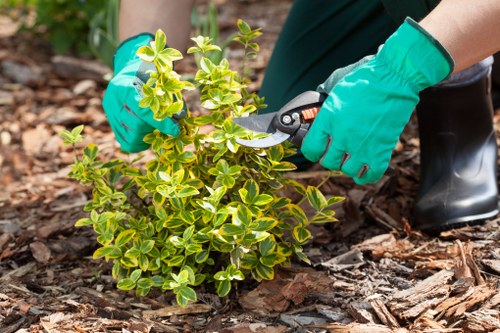
Hedge trimming is one of the most useful ways to bring a garden back into shape when growth has started to spread, block light or disrupt a clear boundary. We can trim hedges to reduce bulk, sharpen outlines and keep growth from spilling too far into paths, driveways or planting areas. The right finish depends on the hedge type, the time of year and whether the aim is a neat formal line or a softer, more natural shape.
Overgrown hedges often affect more than appearance. They can narrow access, obscure views and make the rest of the garden feel crowded. Trimming helps to restore proportion and makes the outdoor space easier to use, especially where the hedge borders a walkway or encloses a small courtyard-style garden. When the shape is addressed carefully, the hedge looks controlled without appearing stripped back.
We can also combine hedge work with removal of cut material and adjacent tidying so that the boundary sits properly within the rest of the garden. That is especially helpful where hedges are part of a larger maintenance cycle rather than a stand-alone job. If the hedge is one part of a fuller outdoor tidy-up, it is usually best to plan the order of work in a way that avoids repeating the same area twice.
Garden clearance for overgrowth, cuttings and neglected areas

Garden clearance is useful when a space has become cluttered with cut branches, dead growth, leaves or accumulated green waste. It can also help where parts of the garden have not been maintained regularly and need a more decisive start before normal upkeep can resume. The work is usually focused on removing the material that is getting in the way, then leaving the area ready for simpler, ongoing care.
This type of work can be particularly useful after seasonal growth, before larger changes to planting or surfaces, or when a garden simply needs attention in several areas at once. Clearance is not the same as redesign: it is about making the space usable and giving it a clearer structure. Depending on the site, we may need to deal with dense growth, awkward corners or areas where access is restricted.
For a clearer result, it is often sensible to pair clearance with a basic maintenance plan. Once the worst excess has been removed, mowing, trimming and border work become much easier to manage. If you are unsure whether the garden needs clearance, maintenance or a mix of both, a careful review of the current condition is usually the best starting point before requesting a quotation.
Light landscaping to improve the shape of the garden
Light landscaping can help a garden feel more ordered without turning it into a major build project. This may include reshaping beds, improving the edges of planting areas, tidying surface transitions and making the outdoor space easier to navigate and maintain. It is about improving structure as well as appearance, especially where the garden has become uneven or awkward to use.
Sometimes the most useful changes are modest. Reworking the outline of a border, clearing a neglected corner or adjusting the way different areas meet can make the whole space feel more coherent. We approach this kind of work with practicality in mind, so the finish is suitable for regular use and not dependent on constant correction. When planned well, a small amount of landscaping can support years of easier upkeep.
Where the garden needs more than cutting and tidying, a landscaping approach can sit alongside maintenance and clearance rather than replacing them. That keeps the work grounded in the actual condition of the site. If you want to improve the feel of the space without committing to a complete redesign, measured changes are often the most sensible option.
About Bayswater
Bayswater is a district in west central London, positioned within the City of Westminster and close to Kensington Gardens and Hyde Park. The area developed significantly in the nineteenth century as London expanded westwards, and much of its character still comes from that period, with stucco-fronted terraces, mansion blocks and mansion-style conversions forming a familiar streetscape. Queensway and Westbourne Grove are among the best-known thoroughfares, with shops, cafés and everyday services giving the district a busy urban rhythm. The wider setting includes important transport links, especially Bayswater and Queensway Underground stations, which connect the area to the Central, Circle and District lines. To the north-west lies Paddington, while Notting Hill sits nearby to the west and south-west, creating a compact cluster of neighbourhoods with different but related identities. Hyde Park and Kensington Gardens remain major open spaces for walking and leisure, and the area’s tree-lined residential streets contrast with the commercial energy of its main roads. Bayswater also has a strong multi-cultural character, shaped by a long history of migration and by the variety of hotels, apartment buildings and local businesses that serve residents and visitors alike. The result is a dense, highly urban place where architecture, transport, retail and green space sit close together.
Planning the right kind of garden work
Choosing the right garden service starts with identifying what is actually causing the problem. If the space looks untidy mainly because the grass is too long, mowing may be enough. If boundaries are spilling out, hedge trimming may need to come first. If there is a build-up of debris or neglected growth, clearance can create the base needed for everything else. A careful quotation should reflect that order of priorities rather than listing unrelated tasks.
It also helps to think about the finish you want. Some gardens need a simple maintainable state, while others need a cleaner, more formal appearance. The right balance may involve a mixture of services rather than a single visit focused on one detail. We can structure the work around the condition of the site, the amount of green waste involved and any visible areas where presentation matters most.
If you are gathering details for a quotation, note the main areas that need attention and whether there are any awkward access points, steep sections or dense growth. That makes it easier to judge the likely scope of work and ensures the quotation is based on the garden as it stands now, not on a vague assumption. Clear information at the start usually leads to a clearer plan.
Working from a quotation that matches the site
Garden quotations are most useful when they are tied to a real task list. A well-prepared quote should reflect the amount of time likely to be spent on mowing, trimming, clearance or related work, as well as the practical factors that affect how the job is completed. Those factors can include access, density of growth, disposal requirements and whether several services need combining into a single visit.
For that reason, it is often helpful to separate the garden into parts when thinking about the quotation. Lawns, hedges, beds, waste and any structural tidying do not all behave in the same way, and they may not need the same level of attention. A clear breakdown avoids confusion and makes it easier to compare different levels of work if you are deciding between a maintenance tidy-up and a more involved clearance.
When you are ready, use the main service page and pricing information to narrow down the right scope before sending an enquiry. If the garden has several linked issues, asking for a quotation that covers the whole picture is usually better than pricing one small section in isolation. For a direct next step, see pricing and quotation guidance.
Green waste, removal and a tidier finish
Many gardening jobs create more material than people first expect, especially where hedge trimming or clearance is involved. Cuttings, branches, leaves and general garden waste all need to be managed so the finished space looks complete rather than left in an in-between state. Handling that material properly is part of what makes the difference between a quick cut and a proper garden tidy-up.
The amount and type of waste can vary a great deal from one garden to another. A lightly maintained plot may need only a modest amount of collection, while an overgrown area may produce a substantial pile once the work begins. That is one reason why garden clearance and maintenance should be considered alongside waste removal rather than treated as separate afterthoughts. The more clearly the scope is set out, the smoother the job tends to be.
If you are planning several tasks together, it can be useful to start with the work that creates the largest amount of cut material, then finish with the neatest visible details. That sequence helps the garden settle into a cleaner final state. For a simple overview of related work, you can also review our garden clearance service alongside maintenance and trimming options.
Combining services into a sensible maintenance plan

Gardens often work best when the service plan reflects how the outdoor space is actually used. A front garden may only need regular mowing and border tidying, while a rear garden might need hedge shaping, seasonal clearance and a little landscaping help around problem areas. Rather than treating every task separately, it is often better to combine the right services into one coherent plan that keeps the garden manageable over time.
That approach also helps when the garden has several layers of work. For example, a clearance visit may expose the need for hedge trimming, or lawn work may show that the borders need reshaping to make the whole space feel orderly again. A maintenance plan can then follow the initial reset, keeping things on track without requiring repeated heavy intervention. If you are comparing possibilities, think first about what the garden needs to look like in six months, not only today.
To arrange the next step, choose the service or combination of services that fits the current state of the garden, then request a quotation in plain terms. If you already know the broad type of work required, the final step is simply to ask for a quote for that scope. You can request a quotation here when you are ready.